
Cumberland Island ~ Discover the Mysteries
History
Geography
Wildlife
History
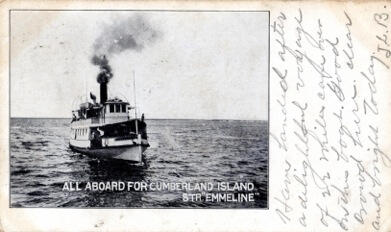
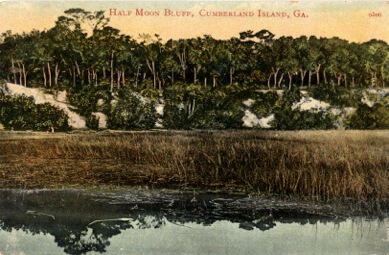
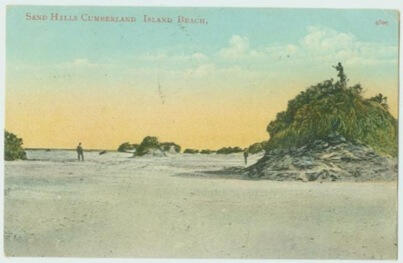
The history of people on Cumberland Island is rich, varied and linked to the Island’s complex natural habitat. No one really knows how long human beings have used its resources for survival, or been inspired to create art, or simply taken solace in its awesome beauty. We know aboriginal people populated the coastal region of what we call Georgia as early as 2000 B.C. and that they enjoyed its diverse and delectable food sources, including oysters, crabs, fish, deer, and bear.
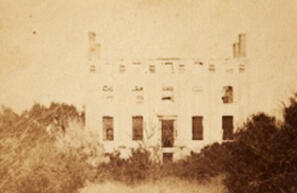
History that has a more specific record starts with the early Spanish missions in the 16th century. In the 1730s, James Edward Oglethorpe laid out two forts, one on each end of the Island. In the 1750s, aspiring planters came to the Island once slavery was allowed on its shores. After the American Revolution, prestigious families, such as that of Nathaniel Greene, became interested in Cumberland’s natural resources; the first mansion was built on the site we now know as Dungeness.
The British were present at Cumberland early in the nineteenth century, and there are detailed descriptions of Robert Stafford’s plantation as it existed between 1815 and 1870. The Civil War had a profound effect on the Island’s human history, and Reconstruction saw both speculators and freed slaves trying to wrest a living out of the chaotic devastation the war had caused.
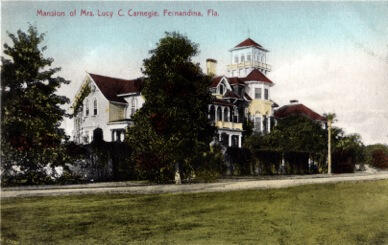
In the early 1880s, Thomas Morrison Carnegie and his wife, Lucy Coleman Carnegie, came to the Island and established the family’s presence, which exists to the present day. In the 1960s the human population began to diversify somewhat as the land started to leave the exclusive holdings of individual families, and the evolution of the National Seashore began.
History
Geography
Wildlife
Cumberland Island Conservancy
Our Mission
TO SUPPORT educational and scientific research on Cumberland Island, Georgia.
TO PROVIDE monetary and physical support for the preservation of Cumberland Island, and to work with the National Park Service as co-stewards in preserving this great natural, cultural, and historical resource.
TO AID in the dissemination of educational and scientific information regarding Cumberland Island to the National Park Service, the public at large, and the residents of Cumberland Island.
Cumberland Island has already been saved. It was saved from commercial development by the Congressional legislation of 1972 establishing the Cumberland Island National Seashore. Our mission is to work with the National Park Service, to support it and its activities, and to advise it on issues where the Conservancy feels that it will be helpful. The Conservancy is an active co-steward, not an activist group.
The Conservancy does not want Cumberland Island to be just another tourist destination. At the same time, human activity has been part of the Island’s heritage and is one element that makes Cumberland Island so special. The Conservancy is continually striving to find a balance between allowing the public full access to their National Park and preserving the fragile ecosystem for generations to come.
Our Members
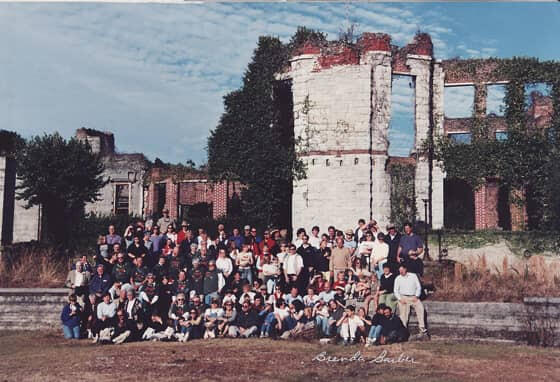
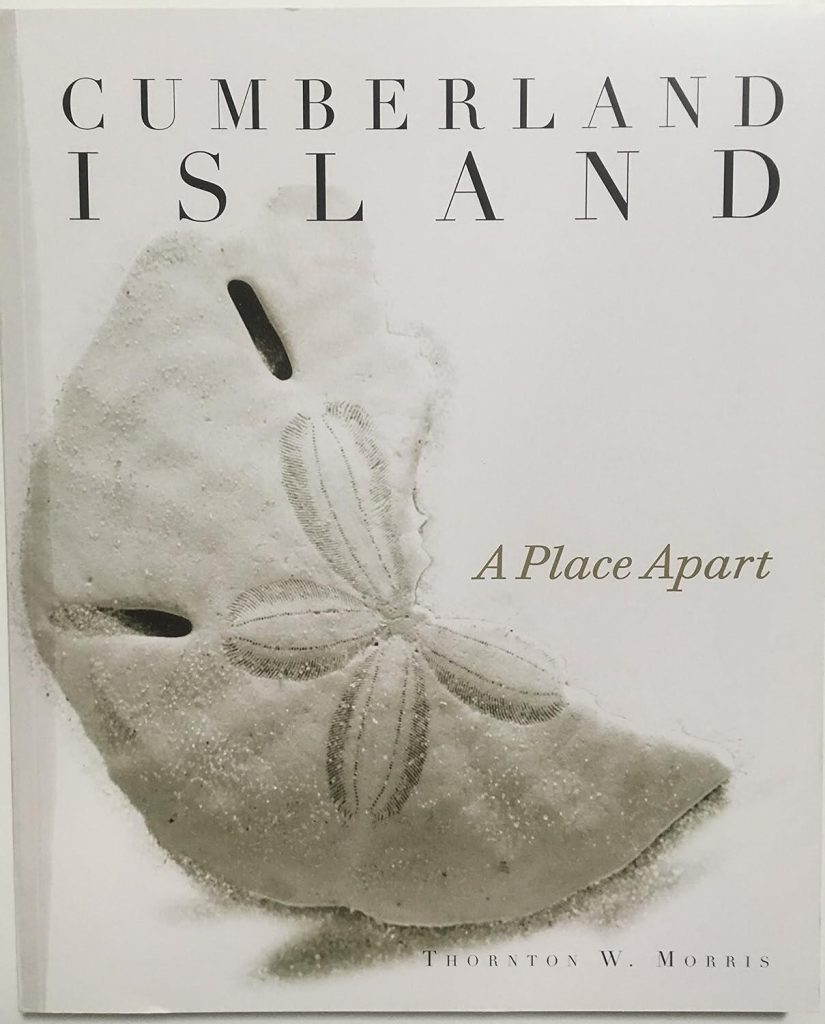
The Cumberland Island Conservancy, Inc. is a nonprofit entity organized by individuals on the Island and others interested in its preservation. Its current board members include the Right Reverend Samuel G. Candler, Franklin W. “Whit” Foster, Thornton W. Morris, Glenn D. Warren and Per G. Lofberg.
The millennium photo above includes Conservancy members and many of the residents of the Island. We stand on the front steps of the ruined nineteenth century Dungeness mansion, located on the south end of the Island.
Our Projects
The Conservancy was instrumental in negotiating the access across private property to provide the Alternative Trail traversing the middle of the Island. This continual privilege of the public to use private property is intended to allow the visitors to hike up and down the Island from the Sea Camp area to Stafford without experiencing automobile traffic. The Conservancy is instrumental in continuing to provide this access for visitors.
The Conservancy provided a grant to the National Park Service for the purchase of high tech equipment with which to provide state-of-the-art video of the highlights of Cumberland Island. It is shown at the Sea Camp station for guests leaving Cumberland.
The Conservancy, in conjunction with the National Park Service and the Georgia Department of Natural Resources, is active in ongoing shore bird research. This has included the research surrounding the nesting habits of terns, as well as a much-needed research project for the oyster catcher.
The Conservancy has been active in the research surrounding the nesting of the large sea turtles for Cumberland.
The Conservancy has sponsored retreats to the Island for artists and writers. Many of these visitors carried home with them the glimpses of transformation that help us as individuals go from one place to another spiritually.
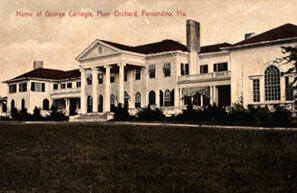
The Conservancy has supported a creative symposium emphasizing dance and the natural environment as a medium for the expression of love, compassion, acceptance and forgiveness. A part of the symposium was an impromptu dance at Plum Orchard.
Our experience has been that whether it be a superintendent, a ranger, or a volunteer tour guide, the vast majority of the individuals comprising the National Park Service team are dedicated individuals who strive to carry out the mandates of Congress. Above all, these mandates provide for conservation of the natural, historical, and cultural resources of Cumberland Island.
History
Geography
Wildlife
Support Cumberland Island Conservancy
History
Geography
Wildlife
Brought to you by The Cumberland Island Conservancy, Inc.
maintained by volunteers ~@searchbound
Visitor Info
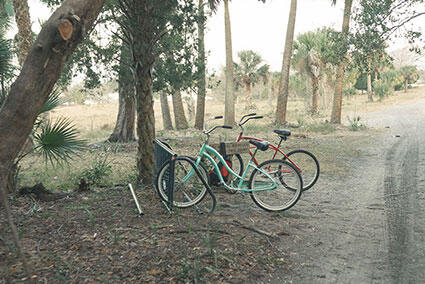
If you intend to camp on the island, or simply be a daytripper, you should contact the National Park Service for access. For information including ferry schedules and camping reservations visit the National Park Service’s Cumberland Island website at here.
Getting to and from the Island:
The National Park Service operates its ferry service from St. Mary’s, GA, stopping at both the Dungeness dock and the Sea Camp Dock. Cumberland can also be accessed through Fernandina Beach, FL, via the vessel operated by The Greyfield Inn.
Lodging
There are two ways to stay on the island: at Greyfield Inn or at one of the National Park Service campsites. Most visitors to Cumberland Island gain their access through the National Park Service. They camp at one of the various sites on the island. The delightful Greyfield Inn is a more expensive way to stay on the Island. Greyfield is a converted Carnegie mansion still owned and managed by members of the Carnegie family. For more information, visit the Greyfield Inn website here.
Activities
The National Park Service provides ranger-guided tours of the Island. Details and schedule can be found here. There are also many outdoor activities including:
- Hiking
- Star Gazing
- Wildlife Viewing
- Camping
- Photography
- Swimming
- Hunting
- Bird Watching
- Private Boating
- Fishing
- Beach Combing
- Biking